Arrange a fish-and-spinach bake as layers with a clear endpoint
A fish-and-spinach bake uses a vegetable bed, fish and a fresh topping in one dish. Food Hero’s recipe keeps the ingredient list short and provides covered and uncovered stages. Use its full method, then arrange the layers so the fish remains identifiable and its doneness can be checked appropriately.
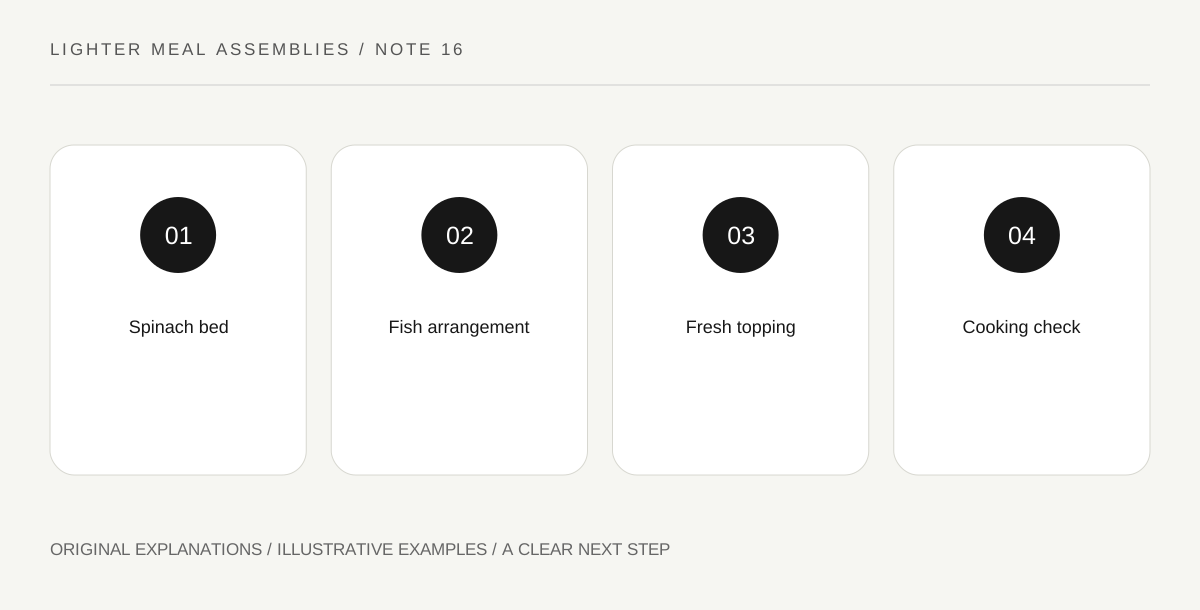
Original explanatory diagram. Read the full method and limitations below.
Prepare the spinach before making the bed
The reference uses thawed frozen spinach with excess liquid squeezed out. Complete that task according to safe handling and package directions before spreading the bed in the baking dish. A frozen block or a pool of thawing water is a different starting condition. The practical observation is whether the bed can be spread reasonably evenly. Do not compensate for unprepared spinach by adding an improvised absorbent layer that changes the dish and its cooking process.
Lay out the fish as the food being checked
Food Hero places thawed fillets over the spinach. Follow the full source arrangement and avoid hiding the fish beneath a deep pile of extra ingredients. Choose a suitable baking dish and preserve access for an appropriate thermometer check. FoodSafety.gov lists 145°F, or 63°C, for fish. An oven dial gives the appliance setting, not the center temperature of a fillet. Different thicknesses deserve attention rather than an assumption that every piece finishes at precisely the same minute.
Keep tomato and onion as a topping task
The reference adds diced tomato, green onion and seasoning above the fish. Prepare those ingredients before raw-fish handling where practical, and maintain appropriate separation and cleaning. Name the actual seasoning blend because its ingredients and salt contribution can vary. A Cajun or Creole label is not a universal allergy statement. The original meal-design question is whether the topping is distributed so several bites include it, rather than concentrated on one fillet while the rest remain plain.
Read covered and uncovered as different stages
Follow the source’s baking sequence and the appropriate fish endpoint instead of treating foil removal as proof that the food is complete. Plan a suitable separately prepared grain or another companion if wanted. The source’s yield is a recipe-production description, not a required serving for each person. Record the fish thickness and ingredient form as observations for a repeat, without turning one fictional example into a tested universal timing claim or extending fish instructions to a poultry substitution.
Illustrative worked example
Illustrative assembly: A cook prepares the spinach bed, arranges identifiable thawed fish fillets and distributes the tomato topping. They follow the reference’s covered and uncovered stages and check the fish appropriately. A separate suitable side is prepared for the meal. The fictional plan does not assert a measured cooking time, prescribe a fillet portion or imply that the same process automatically cooks chicken safely.
Questions that come up
Does the oven reaching 350°F prove the fish is ready?
No. Oven setting and food center temperature are different measurements. Check the actual fish appropriately.
Can chicken use the fish endpoint?
No. Poultry needs 165°F, or 74°C. A different ingredient requires an appropriate complete process and endpoint.
References and scope
These sources support the factual background. Examples and exercises are original illustrative teaching material. References do not imply endorsement.
- OSU Food Hero: Fish and spinach bake — The identified recipe’s ingredients, sequence and permitted variations.
- FoodSafety.gov: Safe internal temperatures — Poultry 165 F; ground beef/pork 160 F; fish 145 F; egg dishes 160 F; casseroles and reheated leftovers 165 F.