Let black-eyed peas become tender before finishing the greens
Black-eyed peas and collard greens can share a pot without beginning at the same moment. The OSU Food Hero recipe gives them distinct stages. Use its complete quantities and method, then build your preparation around the different ingredient forms so dinner does not depend on an optimistic single timer.
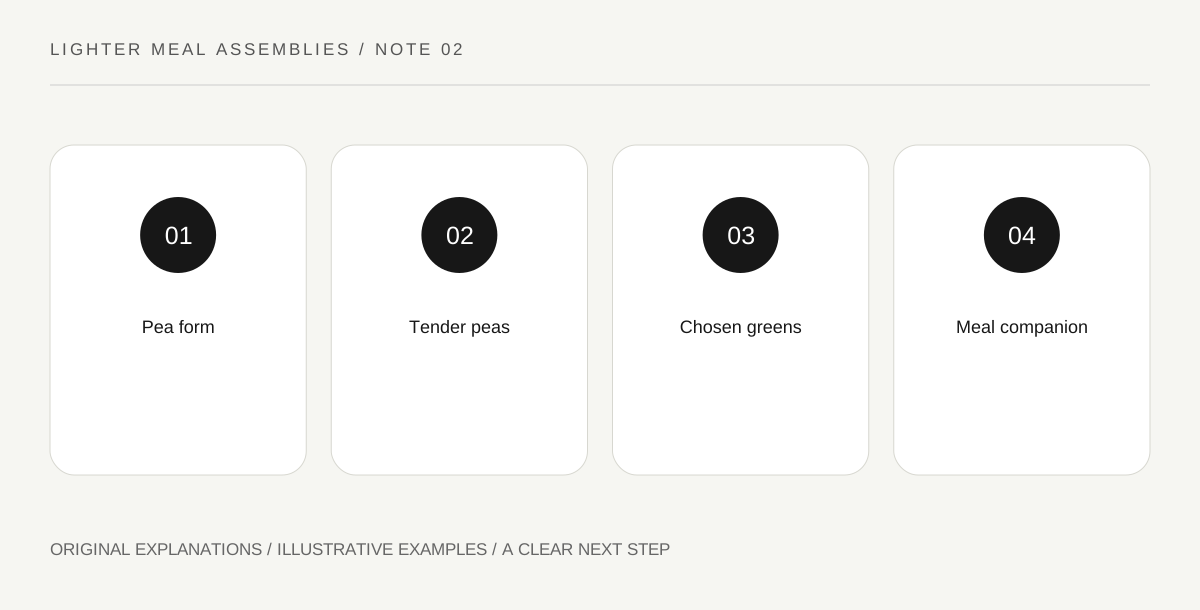
Original explanatory diagram. Read the full method and limitations below.
Name the pea form on the shopping note
The reference starts with soaked dry black-eyed peas and also gives frozen and canned alternatives. Those are different starting conditions. Write dry, frozen or canned beside the ingredient so another shopper does not unintentionally change the process. If using the dry version, include the source’s soaking step in the schedule. A bag in the cupboard is not automatically the fastest option when the household needs dinner soon and the preliminary work has not happened.
Prepare the greens while preserving their identity
The source uses trimmed chopped collards and describes alternatives with different cooking needs. Choose one deliberately. Keep the selected green visible in your note rather than writing only leafy vegetables. A quick-cooking leaf and a robust collard are not interchangeable timing instructions. Prepare produce appropriately and handle stems according to the recipe. The point is to create a planned texture, not to cook every leaf until it disappears into the broth.
Use tenderness as the stage transition
Food Hero cooks the peas in seasoned broth before adding the greens, then continues until the chosen greens are suitably tender. Follow that sequence and the source’s actual method. The practical observation is whether the peas have reached the intended stage before the next ingredient arrives. A calendar alarm can prompt a check but cannot make a firm pea tender. Avoid compensating for a late start by turning the heat high enough to dry the pot while the center remains underdone.
Finish the meal beyond the pot
The source suggests rice or cornbread alongside. Select a suitable companion and plan its separate preparation so it is available when the pot is ready. The serving is flexible; the recipe yield is not a personal intake rule. Record which pea and green forms you used if you want to repeat the meal. That combination tells the next cook much more than a note saying the recipe took longer than expected, because it preserves what actually went into the pan.
Illustrative worked example
Illustrative timing decision: A cook wants dinner on a short evening and notices that the dry peas have not been soaked. They choose the source’s canned alternative and follow its adjusted cooking approach rather than pretending the dry version has become quick. They name collards on the preparation note and plan cornbread separately. The scenario is a planning exercise, not a reported taste test or a universal cooking-time guarantee.
Questions that come up
Can canned peas use the dry-pea schedule unchanged?
The source notes that prepared forms need less cooking. Follow its actual alternative instructions rather than keeping the dry version’s timing automatically.
Are spinach and collards the same cooking task?
No. Their texture and cooking needs differ. Use the source’s guidance for the selected green and check the intended tenderness.
References and scope
These sources support the factual background. Examples and exercises are original illustrative teaching material. References do not imply endorsement.
- OSU Food Hero: Black-eyed peas and greens — The identified recipe’s ingredients, sequence and permitted variations.