Fill pumpkin-ricotta shells after the pasta has its own preparation
Pumpkin and ricotta make a soft filling inside large pasta shells, with tomato sauce beneath and a cheese finish above. Food Hero’s recipe separates pasta preparation, mixing, filling and baking. Use its full quantities, then organize the dish so those stages remain clear instead of treating the oven as a fix for every unfinished component.
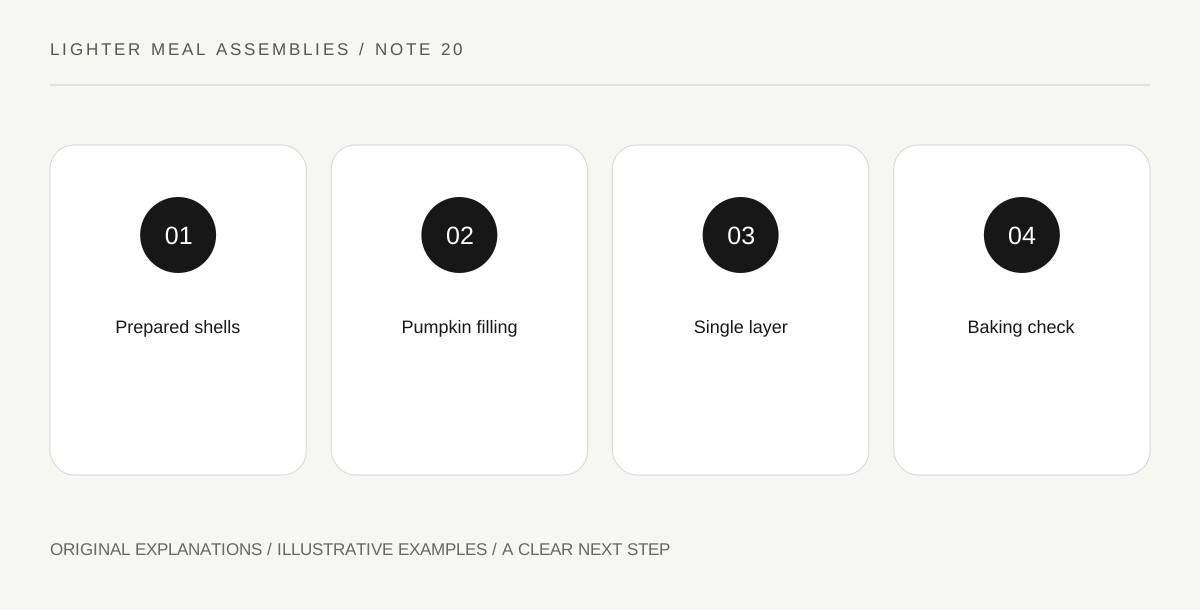
Original explanatory diagram. Read the full method and limitations below.
Choose plain pumpkin and the intended shell shape
Read the source and ingredient labels before shopping. A sweetened prepared pie filling differs from plain pumpkin, and small pasta shells do not hold a jumbo-shell portion. Select the ingredients the recipe actually uses. Keep ricotta and other perishable ingredients appropriately refrigerated until their preparation stage. The original shopping question is whether the food form supports the intended task, not whether the package has a seasonal pumpkin picture or a familiar orange color.
Prepare pasta before handling the filling
Food Hero cooks shells by their package directions, then lays them out to cool enough for filling. Follow that sequence. Arrange a suitable clean workspace so the shells can be handled without piling them into a tangled container. A broken shell is a practical assembly issue to resolve, not a reason to force an extra-large filling into the next one. Do not assume dry pasta will receive the same result from a baking process designed for already cooked shells.
Keep the cheese division visible
The reference reserves a small part of the grated cheese for the top while mixing the rest with ricotta, pumpkin and seasonings. Put that reserved portion aside before combining the filling. This prevents a later search for a topping that has already been stirred into the bowl. The practical observation is whether the mixture can be distributed coherently among the intended shells. The source provides the formula; avoid changing several proportions by eye while retaining its assumed yield or nutrition information.
Use the dish arrangement and baking checks together
Food Hero places filled shells in one layer over sauce, then uses covered and uncovered baking stages. Follow the complete method and appropriate food-safety guidance; FoodSafety.gov lists 165°F for casseroles. Plan a suitable companion if wanted and serve amounts that fit the eater’s needs. Record the actual pumpkin and dairy products used for a repeat. A vegetarian-style pasta bake can be enjoyable without being presented as a fixed weight-loss portion or a guarantee that any amount is nutritionally identical.
Illustrative worked example
Illustrative assembly plan: A cook chooses plain pumpkin and jumbo shells, prepares the pasta separately and reserves the topping cheese before mixing. The baking dish is checked for the source’s single-layer arrangement. They follow the complete baking process and appropriate center check, with suitable additional food available. The fictional plan does not claim a tested outcome, an exact shell count for every brand or a personal calorie allowance.
Questions that come up
Can sweetened pie filling replace plain pumpkin unnoticed?
No. It changes the ingredient formulation. Read the actual label and use the ingredient the selected recipe intends.
Can dry shells use the same baking sequence?
Do not assume that. The reference prepares pasta separately first. A process designed for dry pasta would need its own appropriate complete instructions.
References and scope
These sources support the factual background. Examples and exercises are original illustrative teaching material. References do not imply endorsement.
- OSU Food Hero: Pumpkin ricotta stuffed shells — The identified recipe’s ingredients, sequence and permitted variations.
- FoodSafety.gov: Safe internal temperatures — Poultry 165 F; ground beef/pork 160 F; fish 145 F; egg dishes 160 F; casseroles and reheated leftovers 165 F.