Finish mushroom stroganoff after the thickening stage
Mushroom stroganoff combines a cooked mushroom-onion base, a thickened liquid and a dairy finish. Food Hero’s recipe gives those stages separately. Use the full formula, then plan the noodles and finishing ingredient so the sauce does not become a hurried mixture of raw starch, boiling dairy and already-soft pasta.
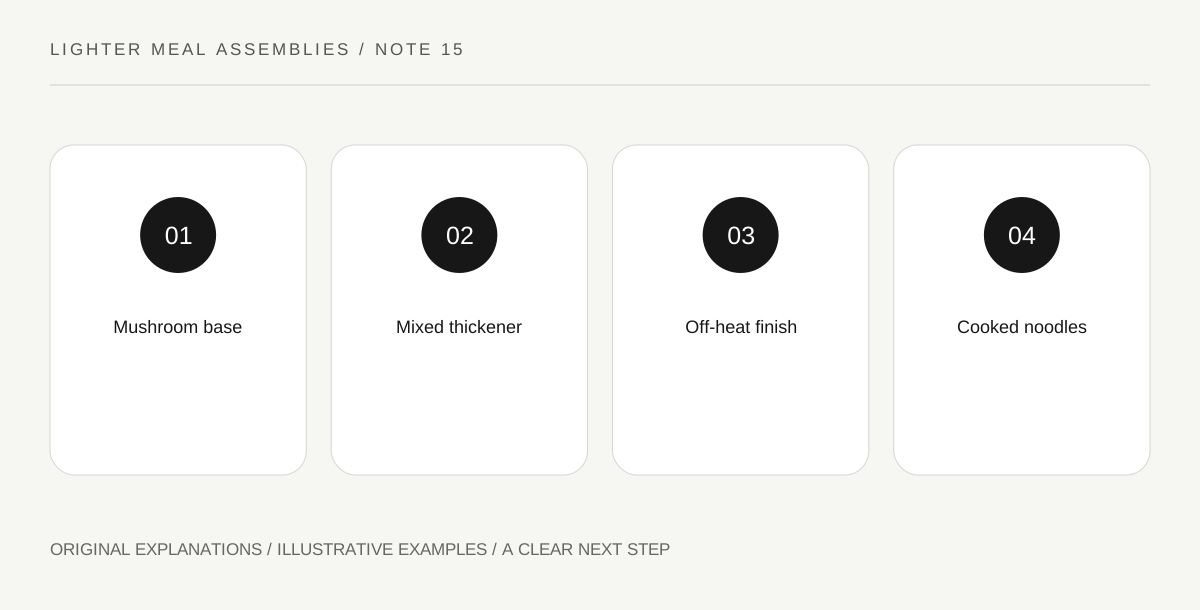
Original explanatory diagram. Read the full method and limitations below.
Name mushrooms as the main sauce texture
The reference uses sliced fresh mushrooms with chopped onion. Prepare them so their presence remains apparent in the finished sauce. The original planning question is whether the slices will share a forkful with the chosen noodles rather than forming one large unmanageable clump. Do not assume a recipe called stroganoff must contain beef. Identify the actual ingredients for the people eating, especially if a familiar name causes someone to expect a different dish.
Mix the thickening liquid before adding it
Food Hero combines water, bouillon, garlic powder and cornstarch in a separate bowl before adding it to the cooked mushroom base. Use the source’s amounts and sequence. A dry spoonful of starch added by eye is not the same process. Keep the bowl identifiable and stir as directed so the ingredient is incorporated appropriately. Read bouillon labels for the actual product rather than assuming vegetable, beef and chicken versions have identical ingredients or suit the same dietary requirements.
Reserve the dairy finish for off heat
The source removes the pan from heat before stirring in sour cream and gives plain yogurt as an alternative. Keep that instruction visible while working. The practical observation is that thickening and finishing are separate jobs. Adding the dairy early because it is already measured changes the sequence. An alternative ingredient should be selected deliberately, not treated as proof that all dairy and nondairy products will produce the same texture in the same formula.
Time the noodles as their own preparation
The recipe serves the sauce with cooked whole-grain noodles or brown rice. Choose one and follow its appropriate package directions. A large pan of sauce does not cook a dry grain simply because it will eventually share the plate. Keep cooked components handled safely and plan service together. Record the grain and dairy choice in a repeat note, along with what you observed about sauce texture. That creates a useful cooking question without inventing a nutrition benefit or claiming that a creamy dish needs to be stripped of every satisfying ingredient.
Illustrative worked example
Illustrative timing plan: A cook chooses whole-grain noodles, prepares the source’s thickening liquid separately and reserves plain yogurt for the off-heat finish. The noodle preparation is scheduled to meet the sauce at serving. Their note identifies the bouillon and dairy used. The example does not claim a successful test or make a universal substitution rule for every yogurt or cream alternative.
Questions that come up
Can I add sour cream with the raw mushrooms?
Follow the source’s sequence. It thickens the sauce first, removes the pan from heat and then adds the dairy finish.
Does a vegetable bouillon label prove suitability for every allergy?
No. Read the actual product ingredients and the person’s requirements. Category names do not replace a specific label review.
References and scope
These sources support the factual background. Examples and exercises are original illustrative teaching material. References do not imply endorsement.
- OSU Food Hero: Mushroom stroganoff — The identified recipe’s ingredients, sequence and permitted variations.