Give shredded vegetables a coherent cake batter
Vegetable cakes can bring grated produce and an egg-based batter together in a manageable pan shape. Food Hero’s recipe provides a specific formula rather than an instruction to bind any wet vegetables with more flour. Use the source quantities, then think about cut, distribution and a cooking shape you can turn.
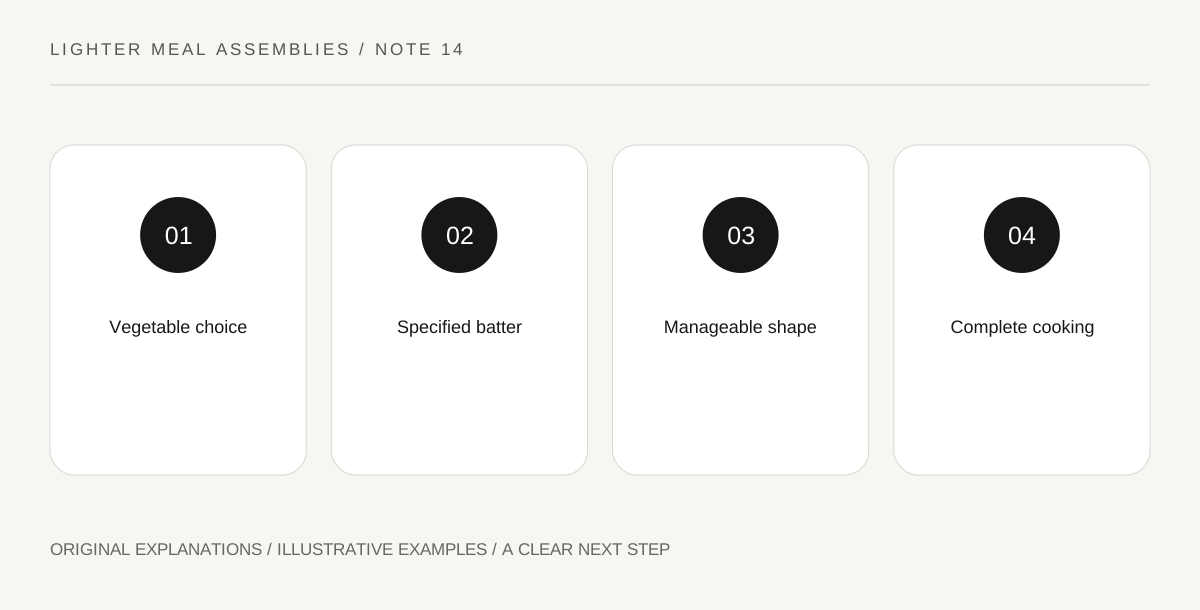
Original explanatory diagram. Read the full method and limitations below.
Choose the vegetable combination before grating
The source lists several vegetables and notes preparation differences, including pressed drained zucchini and optional precooking of harder vegetables. Select a combination intentionally rather than emptying every leftover into the bowl. Write the actual vegetables in the cooking note. A fine carrot shred and a large potato chunk do not create the same bite. Use safe equipment and prepare produce appropriately before grating; the desired texture should never require unsafe hand placement near a blade.
Mix the specified binder as a formula
Food Hero combines cheese, flour, baking powder, seasonings, eggs and other ingredients before the vegetables enter. Follow its full recipe. The batter contains relevant allergens in its standard form, including egg, milk and wheat. A vegetable-heavy title does not make those ingredients disappear. If a suitable alternative formula is needed, choose one deliberately. Repeatedly adding flour to an unfamiliar mixture changes more than texture and should not be presented as an automatically validated fix.
Plan a size the spatula can support
The source uses measured batter portions in a lightly oiled skillet or griddle. Keep the actual method and complete cooking requirements in view. FoodSafety.gov lists 160°F, or 71°C, for egg dishes. A browned exterior should not be treated as the sole evidence that a thick center has cooked appropriately. The original planning observation is whether each cake can be turned without scraping the entire pan or breaking into several unrelated pieces. A more dramatic diameter is not a necessary improvement.
Build a plate beyond the test cake
Choose suitable accompaniments and enough food for the eater rather than assuming a small vegetable cake is a complete dinner. A sauce, another protein-food component or an appropriate grain can have a distinct role. Keep raw batter utensils separate from cooked-food serving. If saving food, preserve its actual identity and follow appropriate storage guidance. A note naming the vegetables and batter version helps another adult understand what the meal contains and avoids calling an egg-rich dish merely vegetables.
Illustrative worked example
Illustrative preparation: A cook chooses a defined carrot-and-zucchini combination using the source’s preparation directions. They follow the batter formula, use manageable pan portions and check complete cooking appropriately rather than chasing surface color alone. The cakes become one part of dinner with suitable additional food. The fictional plan reports no test yield, ideal patty thickness or individualized serving amount.
Questions that come up
Does vegetable in the name mean egg-free?
No. The standard reference contains eggs and other relevant allergens. Read the full ingredient list and choose a suitable verified formula when needed.
Can a very thick cake be judged only by its crust?
No. Surface browning does not establish the center’s cooking. Follow a suitable complete method and appropriate food-temperature guidance.
References and scope
These sources support the factual background. Examples and exercises are original illustrative teaching material. References do not imply endorsement.
- OSU Food Hero: Garden vegetable cakes — The identified recipe’s ingredients, sequence and permitted variations.
- FoodSafety.gov: Safe internal temperatures — Poultry 165 F; ground beef/pork 160 F; fish 145 F; egg dishes 160 F; casseroles and reheated leftovers 165 F.