Keep ground beef and broccoli recognizable in a quick skillet
Food Hero’s beef-and-broccoli recipe uses ground beef rather than the sliced steak found in many restaurant versions. That distinction changes the shopping and preparation task. Follow the identified recipe’s quantities, then keep the meat, sauce and broccoli stages clear instead of borrowing assumptions from a different stir-fry.
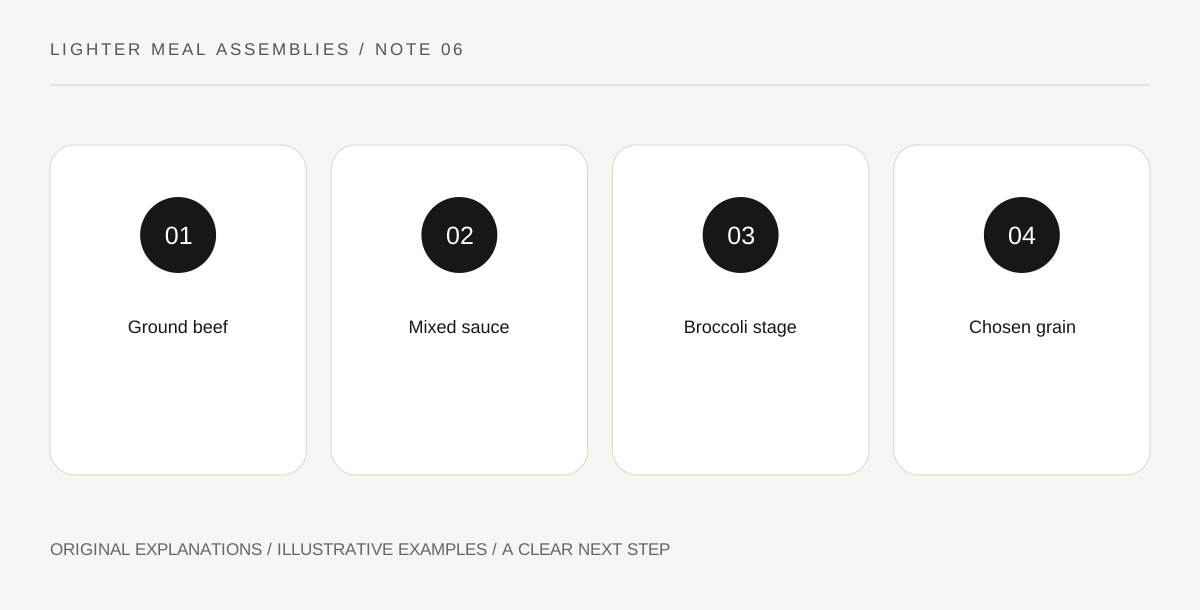
Original explanatory diagram. Read the full method and limitations below.
Read ground as part of the recipe name
The reference seasons lean ground beef with ginger and garlic, then combines it with a prepared sauce and broccoli. A package of steak strips is not an unnoticed equivalent. Choose the actual ground-meat form and keep its handling separate from ready-to-eat foods. FoodSafety.gov lists 160°F, or 71°C, as the minimum for ground beef. Use an appropriate doneness check rather than relying on the sauce’s color to tell you what happened inside the meat.
Mix the sauce before the pan needs it
The source sauce includes soy sauce, cornstarch, sesame oil, seasoning and water. Set out a separate mixing bowl so the starch enters as part of the intended mixture rather than a dry lump dropped into the skillet. Read the actual ingredient labels, including wheat, soy and sesame concerns where relevant. A low-sodium description does not mean the finished product is allergen-free or automatically suitable for every individual requirement.
Choose broccoli pieces that can share the skillet
The reference accepts fresh or frozen chopped broccoli. Name which form you use and follow the recipe’s actual cooking sequence. Inspect the distribution of stem and floret pieces when planning bites. A very large stalk piece and a tiny floret may not reach the desired texture together. This is an original observation task for your kitchen, not a claim that every frozen product behaves identically or a reason to ignore its package instructions.
Make the grain choice explicit
Food Hero serves the mixture over cooked bulgur and allows another whole grain. Bulgur is wheat, so it is not an invisible substitution for someone avoiding it. Prepare the chosen grain by its own appropriate directions and keep its identity with the meal. When repeating the dish, record ground beef, broccoli form and grain together. A useful note explains the actual meal rather than calling it takeout-style and leaving the next cook to guess the ingredients, safety endpoint and accompaniments.
Illustrative worked example
Illustrative skillet plan: A cook chooses the ground-beef reference rather than buying steak strips. They mix the sauce in advance, use the appropriate meat-temperature check and serve the finished mixture with a separately prepared grain suitable for the household. Their note says frozen chopped broccoli so the next attempt has context. No invented timing result, restaurant comparison score or calorie advantage is asserted.
Questions that come up
Can I assume this is a steak-strip recipe?
No. The linked Food Hero version uses ground beef. A different meat form needs an appropriate different method.
Is bulgur suitable for a wheat-free meal?
No. Bulgur is wheat. Choose an appropriate alternative and check the sauce and other ingredients for the individual’s requirements.
References and scope
These sources support the factual background. Examples and exercises are original illustrative teaching material. References do not imply endorsement.
- OSU Food Hero: Beef and broccoli — The identified recipe’s ingredients, sequence and permitted variations.
- FoodSafety.gov: Safe internal temperatures — Poultry 165 F; ground beef/pork 160 F; fish 145 F; egg dishes 160 F; casseroles and reheated leftovers 165 F.