Treat homemade chorizo as seasoned raw meat until cooked
Food Hero’s reduced-fat chorizo recipe builds seasoning into a mixture of ground beef and poultry. It is a fresh-meat preparation, not a shelf-stable cured sausage. Use the full recipe for its formula and refrigerator stage, then keep raw status and the poultry cooking endpoint clear throughout the workflow.
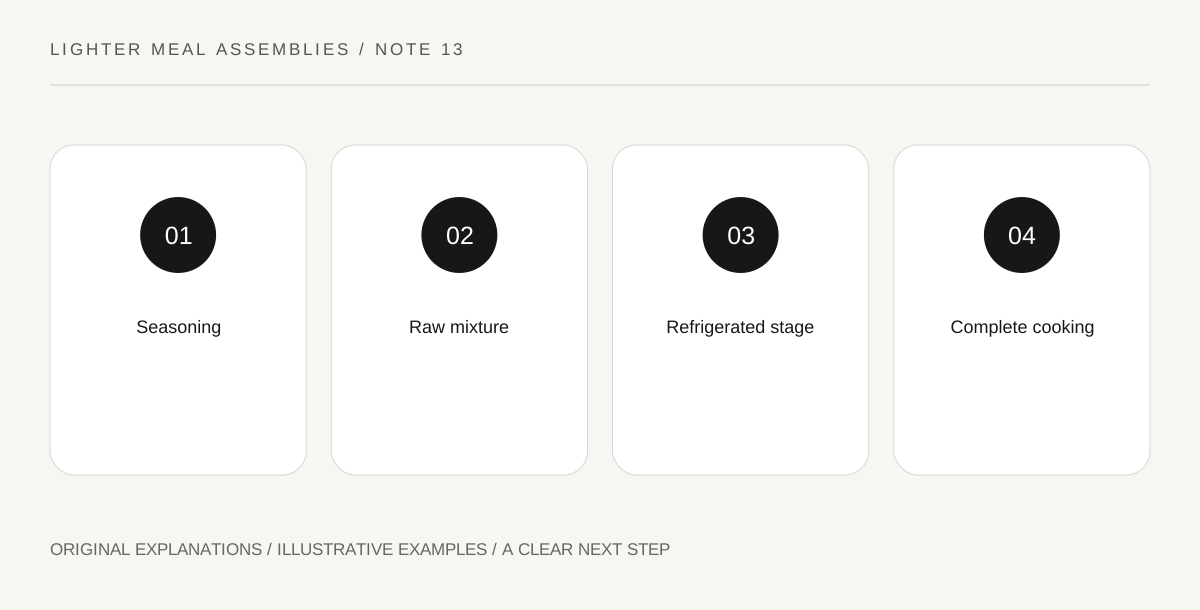
Original explanatory diagram. Read the full method and limitations below.
Read the actual meat mixture
The reference combines lean ground beef with ground turkey or chicken and a vinegar-spice mixture. Name both meats in the preparation note. A dish containing poultry needs the appropriate poultry endpoint: FoodSafety.gov lists 165°F, or 74°C. The beef component does not lower that requirement. A red spice color can make visual judgment particularly misleading, so plan an appropriate thermometer check rather than assuming that a familiar sausage appearance establishes doneness.
Mix seasoning as a separate task
Food Hero prepares the seasoning mixture before incorporating it into the meat. Open the full source and measure its ingredients instead of relying on a generic taco-seasoning packet as an unnoticed equivalent. Different ground peppers can vary in heat. Keep the actual pepper choice visible and consider who will eat the meal. The original kitchen question is whether the seasoning task can be completed calmly before raw-meat handling begins, so the cook does not repeatedly reach into clean storage with contaminated hands.
Keep the resting stage refrigerated
The source’s flavor-development wait takes place covered in the refrigerator. It does not turn the mixture into cured meat. Plan suitable storage and handling for the actual raw ingredients and follow current guidance. Do not leave the bowl on the counter because vinegar is present, or taste the raw mixture to decide whether seasoning is adequate. A label should preserve raw status and the meat identities, especially if another adult will be responsible for cooking later.
Choose a meal role after complete cooking
The seasoned meat can serve a clear role in a suitable meal alongside vegetables, beans, grain or another appropriate companion. Select the amount and overall meal for the eater’s needs rather than translating the recipe’s reduced-fat title into an unrestricted or restrictive rule. The name describes a particular source formulation; substitutions change that formulation. If preparing some for later, use an appropriate storage plan and distinguish raw prepared mixture from cooked leftovers so the next adult knows which process remains.
Illustrative worked example
Illustrative handover: One adult prepares the source’s seasoning and meat mixture and refrigerates it appropriately. A clear note names both beef and poultry and states that the mixture is raw. The second adult follows the cooking method and 165°F poultry endpoint before assembling dinner with suitable companions. The example does not invent curing protection, a storage duration or a calorie comparison with every commercial chorizo.
Questions that come up
Does vinegar make this a cured shelf-stable sausage?
No. Treat it as seasoned raw meat until appropriately cooked. The recipe’s refrigerator stage does not establish shelf stability.
Can I use the ground-beef endpoint for the mixed batch?
No. The mixture includes poultry, for which FoodSafety.gov lists 165°F, or 74°C. Follow guidance for the actual ingredients.
References and scope
These sources support the factual background. Examples and exercises are original illustrative teaching material. References do not imply endorsement.
- OSU Food Hero: Reduced-fat chorizo — The identified recipe’s ingredients, sequence and permitted variations.
- FoodSafety.gov: Safe internal temperatures — Poultry 165 F; ground beef/pork 160 F; fish 145 F; egg dishes 160 F; casseroles and reheated leftovers 165 F.