Breakfast and light meals3 min read
Tuna, apple and celery can create a bright lunch filling with several distinct textures. This companion uses California’s public-health tuna-apple salad as its reference. Open that recipe for quantities, then organize the chopping and assembly so the fish, crisp produce and bread remain recognizable at the table.
Read the guide ↗
Vegetable mains3 min read
Black-eyed peas and collard greens can share a pot without beginning at the same moment. The OSU Food Hero recipe gives them distinct stages. Use its complete quantities and method, then build your preparation around the different ingredient forms so dinner does not depend on an optimistic single timer.
Read the guide ↗
Fish and poultry3 min read
A white-fish stew can have tender fish and properly prepared vegetables when their cooking stages remain distinct. Food Hero’s reference builds the vegetable base before introducing fish. Use the full linked recipe, and treat the fish addition as a planned late task with an appropriate doneness check.
Read the guide ↗
Breakfast and light meals3 min read
Corn pancakes can bring a soft center, whole kernels and a browned surface to a meal. The Food Hero reference is a savory pancake recipe rather than a deep-fried fritter method. Open it for quantities and cooking directions, then plan a suitable accompaniment instead of assuming every pancake needs a sweet topping.
Read the guide ↗
Pan and pot3 min read
A vegetable-rich sloppy-joe filling is a spoonable mixture, not a dry burger patty. Food Hero’s version combines ground meat with several vegetables and tomato ingredients. Use the complete source recipe and choose the meat deliberately, then observe the filling’s consistency before assembling the open-faced serving.
Read the guide ↗
Pan and pot3 min read
Food Hero’s beef-and-broccoli recipe uses ground beef rather than the sliced steak found in many restaurant versions. That distinction changes the shopping and preparation task. Follow the identified recipe’s quantities, then keep the meat, sauce and broccoli stages clear instead of borrowing assumptions from a different stir-fry.
Read the guide ↗
Vegetable mains3 min read
Stuffed cabbage rolls combine a softened leaf wrapper with a filling that has its own cooking requirements. Food Hero’s recipe provides the full process. This companion focuses on organizing that assembly so a cook does not confuse a tender outer leaf with a completely cooked center or discover the dish is too small halfway through rolling.
Read the guide ↗
Vegetable mains3 min read
Food Hero’s spinach-with-garbanzo-beans recipe uses a short ingredient list and a little mashing to connect the mixture. It is a warm bean-and-leaf dish, not a smooth hummus recipe. Use the full source quantities, then decide how its texture and serving role will fit the rest of dinner.
Read the guide ↗
Vegetable mains3 min read
Creamy polenta can be a warm base for many meals, but its topping needs a clear role. Food Hero gives a simple stovetop method and several serving ideas. Use that complete formula, then choose a companion that adds the flavor, texture and substance you actually want rather than treating polenta as a finished plate by itself.
Read the guide ↗
Breakfast and light meals3 min read
Amaranth makes a different breakfast from oat flakes or a bowl of separate rice grains. Food Hero’s stovetop reference describes a range of textures and serving options. Use its full method, then decide whether you want a creamy cereal and what will accompany it rather than expecting it to behave like an unfamiliar substitute.
Read the guide ↗
Vegetable mains3 min read
Squash blossoms offer a different filling from a dense bean mixture. Food Hero’s Latin Heritage Workgroup recipe gently cooks the flowers before placing them with cheese in a corn tortilla. Use the full source for quantities, then organize the short cooking stages so the filling remains a recognizable ingredient rather than an overworked paste.
Read the guide ↗
Vegetable mains3 min read
Quinoa with cactus is an approachable way to use prepared nopalitos, but fresh and canned cactus are different tasks. Food Hero’s Latin Heritage Workgroup recipe explains both. Open the complete source, choose the ingredient form deliberately and plan the grain sequence around the actual preparation you will perform.
Read the guide ↗
Pan and pot3 min read
Food Hero’s reduced-fat chorizo recipe builds seasoning into a mixture of ground beef and poultry. It is a fresh-meat preparation, not a shelf-stable cured sausage. Use the full recipe for its formula and refrigerator stage, then keep raw status and the poultry cooking endpoint clear throughout the workflow.
Read the guide ↗
Vegetable mains3 min read
Vegetable cakes can bring grated produce and an egg-based batter together in a manageable pan shape. Food Hero’s recipe provides a specific formula rather than an instruction to bind any wet vegetables with more flour. Use the source quantities, then think about cut, distribution and a cooking shape you can turn.
Read the guide ↗
Vegetable mains3 min read
Mushroom stroganoff combines a cooked mushroom-onion base, a thickened liquid and a dairy finish. Food Hero’s recipe gives those stages separately. Use the full formula, then plan the noodles and finishing ingredient so the sauce does not become a hurried mixture of raw starch, boiling dairy and already-soft pasta.
Read the guide ↗
Fish and poultry3 min read
A fish-and-spinach bake uses a vegetable bed, fish and a fresh topping in one dish. Food Hero’s recipe keeps the ingredient list short and provides covered and uncovered stages. Use its full method, then arrange the layers so the fish remains identifiable and its doneness can be checked appropriately.
Read the guide ↗
Fish and poultry3 min read
Food Hero’s Chicken Creole uses chicken, vegetables, tomatoes and chili sauce in a covered skillet stage. Chili sauce is a specific ingredient to identify, not a generic instruction to add any hot condiment. Open the full reference, choose the actual product or its stated alternative and plan a suitable companion food.
Read the guide ↗
Breakfast and light meals3 min read
Tofu scramble is a specific preparation of crumbled tofu and vegetables, not a requirement to imitate eggs perfectly. Food Hero’s version uses extra-firm tofu, onion, pepper and spinach. Open the full reference, prepare its ingredients as stated and choose how this warm mixture will fit breakfast or another meal.
Read the guide ↗
Pan and pot3 min read
Food Hero’s West African Peanut Soup is a particular extension recipe with a tomato-peanut base and already cooked chicken. Use the full source and identify those starting conditions before cooking. This companion focuses on ingredient staging and the peanut-butter addition without claiming to represent the many distinct food traditions of a whole region.
Read the guide ↗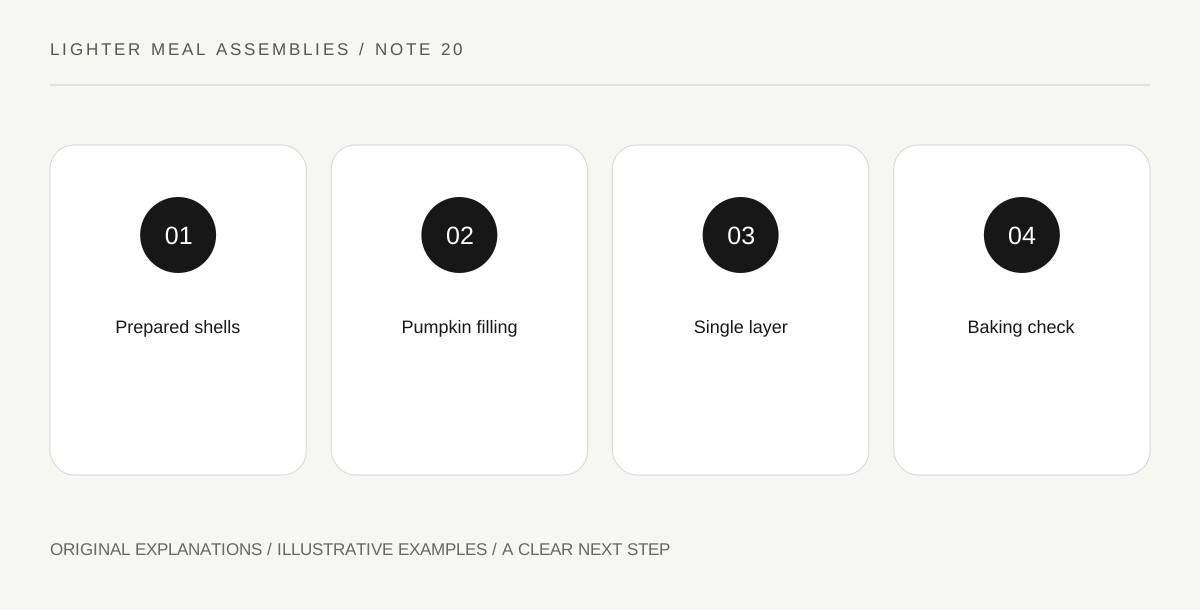
Vegetable mains3 min read
Pumpkin and ricotta make a soft filling inside large pasta shells, with tomato sauce beneath and a cheese finish above. Food Hero’s recipe separates pasta preparation, mixing, filling and baking. Use its full quantities, then organize the dish so those stages remain clear instead of treating the oven as a fix for every unfinished component.
Read the guide ↗